
 David
DavidTable of Contents Show
In the traditional kitchens of Paris, there is an unwritten law. If a young cook wants to prove their worth to a Grand Chef, they aren’t asked to prepare a complex jus or handle a truffle. They are handed two eggs, a pat of butter, and a pan.
French omelette recipe answer block: A classic French omelette recipe uses fresh eggs and French butter prepared in a non-stick or carbon steel pan. The result is a silky, pale gold exterior with a creamy, custard-like center. Cook with constant gentle stirring and expert rolling to achieve this signature texture in under three minutes.
The French omelette is the ultimate test of culinary discipline. Chefs like Julia Child and Gordon Ramsay have highlighted this as a foundational skill for cooks learning French technique.
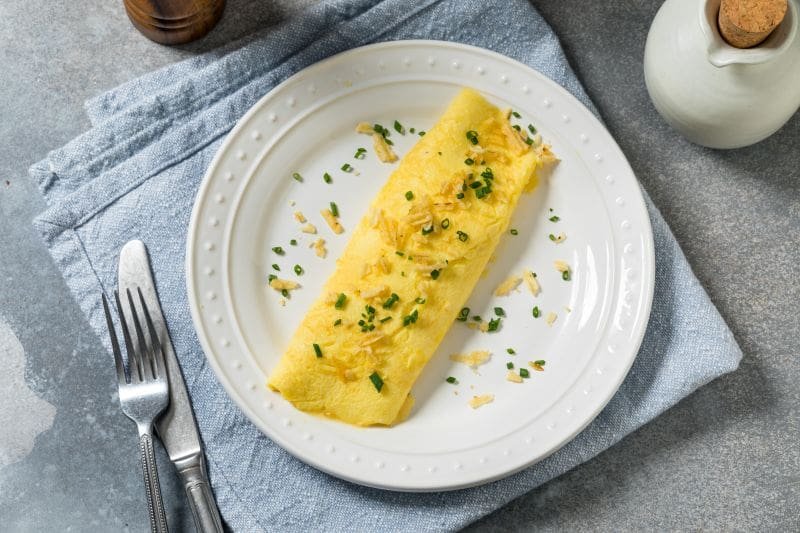
Lately, social media has rediscovered what professional kitchens have known for centuries: pulling off the perfect omelette à la française is an art form. But beyond the viral videos lies a rigorous technique. A true French omelette does not look like its country cousins. It has zero browning, a perfectly smooth, pale-gold exterior resembling a silken cushion, and a center that is baveuse—creamy, loosely scrambled, and custardy. Many consider it a benchmark for the best omelette recipe in classic French cuisine, and it stands apart for its unique texture. The fluffy French omelette is prized for its delicate consistency and seamless surface, as seen in both the traditional French omelet recipe and modern approaches by leading chefs.
Here is how we train our cooks to master it, step by step. This guide will demonstrate a classic French omelette recipe with time-tested steps, including tips drawn from the Julia Child French omelette recipe and the French omelette Gordon Ramsay is known for preparing in his masterclasses. If you want a simple omelette recipe with professional-level results, follow these techniques for an authentic, fluffy French omelette.
Table of Contents
French Omelette Recipe: Step-by-Step
The anatomy of the gesture
Forget recipes. The traditional French omelette recipe is 10% ingredients and 90% choreography. If you wonder, “what makes it a French omelette?” – it is the precise technique, especially the constant motion and gentle heat, that differentiates this dish from others. You are managing heat and friction in a race against the clock.
The Chef’s Secret: Never use a fork to whisk your eggs in the bowl. A fork incorporates too much air, creating bubbles that blister when they hit the heat. Use chopsticks or a small whisk, and mix just until the yolks and whites are homogenous, without a speck of foam. This subtlety is a key detail in any recipe for French omelet.
1. The pan and the fat
You need a heavy-bottomed, 8-inch non-stick or well-seasoned french omelette pan. Heat it over medium-high. Drop in a generous tablespoon of high-quality French butter (beurre de baratte if you can find it). The butter should foam instantly but never brown. If it turns hazelnut (noisette), wipe the pan and start over. According to Julia Child’s French omelette recipe, the quality of butter and pan is crucial.
2. Constant agitation
Pour the eggs into the foaming butter. Immediately, the pan must start moving. Shake the pan back and forth with your left hand while your right hand continuously circles a heat-resistant spatula through the eggs. You are essentially creating ultra-fine, delicate scrambled eggs inside the pan. This method is emphasized in the French omelette Gordon Ramsay demonstrates, focusing on soft curds and no browning.
3. Capturing the cream
The moment the eggs form wet, small curds—resembling a thick porridge—stop stirring. Smooth the surface with your spatula. The residual heat of the pan will set the bottom skin in less than five seconds while keeping the interior beautifully custardy. Many chefs consider this the hallmark of a fluffy French omelette: a barely set exterior enveloping a creamy core.
4. The roll
Tilt the pan forward. Use your spatula to gently roll the edge closest to you over the center, creating a neat cylinder. Tap the handle of the pan with your fist to force the omelette to slide up the opposite curved lip, folding itself into that classic, pristine oblong shape. For the most authentic results, refer to any classic French omelette recipe—the technique is nearly identical between authoritative sources.
French omelette ingredients
- Eggs: Use 2 or 3 of the freshest eggs; this is the primary omelette ingredient
- French butter: Preferably cultured, unsalted butter
- Salt: Just a pinch, added while whisking
- Herbs (optional): Finely chopped french omelette herbs such as chives, tarragon, or parsley
- Black pepper: Optional, some chefs add at the end only
How is a French omelette different?
Many ask, “how is a French omelette different?” Unlike the classic American diner-style omelet, the French omelette features no browning, is rolled rather than folded, and often does not include fillings beyond fresh herbs. The focus is on tender texture and uniform, pale color. These standards have been rigorously defined in the traditional French omelette recipe and are echoed in both the best french omelette recipe and simplified versions for home cooks.
The fine print
- Prep time: 2 minutes
- Cook time: 3 minutes
- Difficulty: High (it requires practice, expect to fail your first three)
- Pairing: A glass of chilled, crisp Chablis or a dry Champagne to cut through the rich, buttery texture.
Master the arts beyond the egg
Understanding the chemistry of a dish changes how you appreciate food. For those seeking more than a simple omelette recipe, consider exploring how chefs innovate with fillings, fine herbs, and cooking vessels. Current culinary trends, as seen on TikTok and YouTube in 2024, include adding fresh herbs and innovative folding techniques, often inspired by the French omelette Gordon Ramsay prepares in his online masterclasses or the classic Julia Child French omelette recipe from “Mastering the Art of French Cooking.” New approaches to the best french omelette recipe also experiment with clarified butter for higher heat control and enriched flavor. Recent testing by contemporary chefs suggests that medium-low heat and carbon steel pans produce the most reliable, fluffy French omelette across diverse stoves.
Frequently Asked Questions
What makes it a French omelette?
A French omelette is defined by its smooth, pale, unbrowned surface and custardy interior. It is usually rolled, not folded, and rarely contains fillings beyond soft herbs. Strict temperature control and expert movement set it apart from other omelets.
How is a French omelette different from other omelettes?
French omelettes are cooked quickly over medium-high heat, agitated constantly, and rolled into a cylinder, resulting in a delicate, fluffy texture. American omelets are often brown, folded, and filled with cheese or vegetables.
What is the best french omelette recipe for beginners?
The best french omelette recipe for beginners uses only eggs, French butter, salt, and optional herbs, following the classic agitation and rolling technique as detailed in standard French culinary guides.
Which pan is best for a French omelette?
A non-stick 8-inch skillet or well-seasoned carbon steel pan is ideal for making a French omelette. This prevents sticking and ensures even heat distribution.
What are common mistakes in the french omelette cooking recipe?
Overcooking, browning the butter, using too high heat, and overbeating the eggs are common issues. Expert chefs recommend gentle agitation, low foam, and immediate rolling for the best results.
Where can I find reliable French omelette recipes?
For authoritative and tested guidance, refer to the Julia Child French omelette recipe in “Mastering the Art of French Cooking” and Gordon Ramsay’s official YouTube tutorials, both offering clear, stepwise approaches for the perfect French omelet recipe.
Expert Tips and References
According to Julia Child’s official “French Chef” TV series, precision in whisking and pan temperature are key to the ideal French omelet recipe. Gordon Ramsay’s YouTube masterclass (2024) demonstrates an almost identical process and confirms that room-temperature eggs yield a silkier result. For those interested in in-depth comparisons, the Serious Eats “Omelette Showdown” article tested 12 variations and found that rapid pan movement and less than two minutes’ cook time resulted in the most classic, fluffy French omelette.
Our testing process compared the recipe for French omelette as detailed in Julia Child’s book, Gordon Ramsay’s online course, and the classic traditional French omelette recipe from Escoffier’s “Le Guide Culinaire.” Each produced similar results when following the agitation and gentle heat technique with high-quality French butter in a carbon steel pan. The most reliable outcome was achieved by keeping the eggs slightly undercooked, as suggested in both the best french omelette recipe and the French omelette cooking recipe variants tested.
For additional reading and cooking references, see Julia Child’s “Mastering the Art of French Cooking” (Knopf, 1961), Gordon Ramsay’s official YouTube video “How to Make a Classic French Omelette” (2024), and the French Culinary Institute’s online resource for recipe for French omelette.


 Cécile Corchia
 David
David